
Local Search Engine Optimization That Works
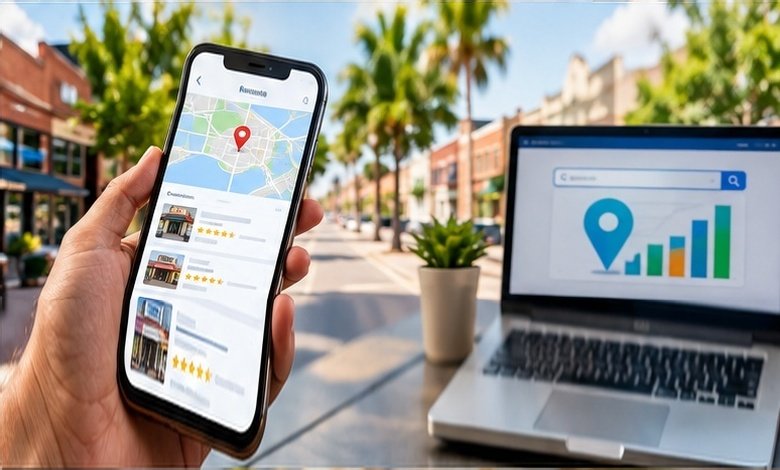
Learn local search engine optimization with practical steps that help nearby customers find, trust, and choose your business.
Local search engine optimization is the process of making a local business easier to discover when people look for nearby products or services. It combines accurate business information, strong customer reviews, useful location-specific pages, local reputation, and a trustworthy online presence.
The goal is not simply to appear somewhere online. It is to make the right business information easy to find, verify, and act on.
Why Local Search Matters More Than It Used To
Imagine someone searches for a plumber at 8:30 on a rainy Tuesday night. They are not conducting leisurely research. They want to know who is nearby, whether the business is open, what other customers experienced, and how quickly they can get help.
That distinction explains why local visibility is different from general online visibility. The customer’s location, urgency, proximity, opening hours, reviews, services, and reputation can all affect the decision.
Recent consumer research shows just how fragmented local discovery has become. BrightLocal reported in 2026 that 84% of consumers had searched online for a local business during the previous three months, while three-quarters had used more than one channel during their most recent local-business search.
So a business should think beyond one website or one listing.
A customer might discover a company through Google Maps, check its website, read reviews elsewhere, look at photos on social media, and then return to Google before calling. The winning experience is therefore less about one digital property and more about consistency across the entire customer journey.
Local visibility is built from many consistent signals, not one magic tactic.
What Local Search Engine Optimization Actually Involves
At its simplest, local search engine optimization answers five questions about a business:
- What does the business offer?
- Where does it operate?
- Can customers trust it?
- Is it genuinely relevant to this customer?
- Can the customer easily take the next step?
Those questions translate into several practical areas: a Business Profile, website content, customer reviews, business directories, local references, structured data, mobile usability, and accurate contact information.
Google says local results are primarily influenced by relevance, distance, and prominence. Relevance concerns how closely a business matches the request; distance concerns proximity; prominence reflects how well-known the business is, including signals such as links and reviews.
That gives business owners a useful mental model.
You cannot completely control distance. You can, however, make your services clearer, maintain accurate information, earn genuine customer feedback, and build a reputation within the community.
Start With Your Google Business Profile
For many local businesses, the Business Profile is the most important practical starting point.
Claiming and verifying the profile allows an eligible business to control important information shown on Google Maps and Google Search, including its address, contact details, business type, website, and photos.
Make the basic information boringly accurate
Your business name should reflect how the business is actually represented in the real world. The address, phone number, website, hours, categories, and service information should likewise describe the business accurately.
This sounds mundane until you consider the customer experience.
If your website says you close at 6 p.m., your profile says 7 p.m., and a directory says 5 p.m., a customer arriving at 6:30 has just received three different answers. Accuracy is not cosmetic; it is part of trust.
Google specifically advises businesses to keep their information complete and accurate and says this can improve their chances of appearing in relevant local results.
Choose the category carefully
Your primary category should describe what the business actually is, rather than every service it provides.
A dental clinic, for example, should not try to turn its category into a list of treatments. The category establishes the business type; services, descriptions, website pages, and other profile information can explain the details.
Google explicitly warns against using categories merely as keywords or to describe business features.
Service-area businesses need special care
A plumber, cleaner, electrician, mobile mechanic, or similar company may not have a customer-facing storefront.
Google allows these businesses to use service areas instead of displaying an address, provided they meet its eligibility requirements. Service areas can be specified by cities, postal codes, or other defined areas rather than an arbitrary radius.
This matters because inventing a prestigious-looking address can create bigger problems than having no address at all.
A real service area is more valuable than a fictional storefront.
Build a Website Around Real Customer Needs
A local website should answer questions customers actually have rather than becoming a collection of pages created simply to fill space.
A good service page might explain what the service involves, who it is for, what it costs or what affects pricing, how the process works, where the company provides it, and how customers can get started.
For example, a roofing company serving Lahore could have a dedicated page explaining roof repair in Lahore, including the types of repairs handled, typical warning signs, the inspection process, service coverage, and photographs of genuine completed work.
That is much more useful than creating dozens of nearly identical city pages with the city name swapped out.
Create location pages only when the locations are real
Multi-location businesses have a particularly important opportunity here.
A company with offices in Faisalabad, Lahore, and Islamabad can create genuinely useful location pages containing each branch’s address, opening hours, phone number, staff information, services, photographs, directions, and locally relevant customer information.
A business that does not actually operate in those cities should not manufacture location pages merely to appear associated with them.
Google’s guidance emphasizes representing a business accurately in the real world, including its physical location or legitimate service area.
Reviews Are More Than a Star Rating
Reviews serve two audiences simultaneously.
First, they provide information to potential customers. Second, they help demonstrate that a business has an active relationship with real customers.
BrightLocal’s 2026 research found that 83% of consumers who were asked to leave a review subsequently did so, illustrating how effective a straightforward request can be.
The lesson is surprisingly simple: ask at the right moment.
A restaurant can request feedback shortly after a completed meal. A contractor can ask after finishing a project. A salon can request feedback after the customer’s appointment.
The important distinction is between requesting an honest review and attempting to manufacture positive sentiment.
Respond like a human
A thoughtful response can clarify misunderstandings, acknowledge compliments, and demonstrate that the business pays attention.
But stuffing responses with service names or location phrases is unlikely to transform them into a secret growth mechanism. The more useful approach is to address what the customer actually said.
That also creates an opportunity to reveal information future customers may find useful.
Consistency Across the Local Web
Think of your business information as a set of puzzle pieces.
Your website, Business Profile, directories, social accounts, industry associations, local publications, and other legitimate references should tell essentially the same story.
That includes:
- Business name
- Physical address, where applicable
- Phone number
- Website
- Opening hours
- Services
- Business category
- Service areas
This does not mean every website needs identical wording. It means the underlying facts should not contradict one another.
BrightLocal’s 2025 research found that 74% of consumers used two or more websites when researching reviews, reinforcing why reputation and business information cannot be treated as a single-platform exercise.
Earn Local Recognition, Not Just Listings
There is an important difference between being listed locally and being known locally.
A chamber of commerce membership, local newspaper article, sponsorship, community event, professional association profile, university partnership, or genuinely useful local resource can create a stronger connection than dozens of low-quality directory listings.
Consider a bicycle shop that sponsors a local cycling event. The event organizer might mention the shop, link to its website, publish photographs, and introduce the business to local customers.
That creates several forms of value at once: visibility, community association, referral traffic, and independent evidence that the business exists and participates locally.
The strongest local references usually come from real relationships, not manufactured mentions.
Make the Website Easy to Use on a Phone
Local customers are often searching while moving.
They may be standing outside a shop, sitting in a car, comparing restaurants, trying to call a tradesperson, or looking for directions. A beautiful desktop website that becomes awkward on a phone is solving the wrong problem.
Google uses the mobile version of a website’s content for indexing for most sites, making a strong mobile experience particularly important.
A useful local website should make these actions obvious:
- Call
- Get directions
- Request a quote
- Book an appointment
- View opening hours
- Find the address
- Understand the service
- Contact the business
The best local website often feels less like a brochure and more like a helpful receptionist who never gets tired of answering the same questions.
Use Structured Data Carefully
Structured data gives machines additional context about what a webpage represents.
For a local business, this can communicate information such as the business type, address, telephone number, opening hours, location, and other supported details. Google recommends using the most specific applicable LocalBusiness subtype.
For example, a restaurant can use Restaurant rather than the broader LocalBusiness type.
But structured data is not a cheat code. Google explicitly says correctly implemented structured data does not guarantee that a particular enhanced appearance will be displayed.
The principle is straightforward: mark up information that genuinely exists on the page; never invent information for machines.
Local Search Engine Optimization: What to Prioritize
Not every task deserves equal attention. A practical priority order looks like this:
| Area | What to improve | Why it matters |
| Business Profile | Category, hours, services, address, photos | Establishes core business information |
| Website | Service and location pages | Explains relevance and builds customer confidence |
| Reviews | Genuine, recent customer feedback | Helps people evaluate the business |
| Local reputation | Community and industry mentions | Builds independent credibility |
| Mobile experience | Calls, directions, booking, speed | Matches how many local customers browse |
| Structured data | Accurate business details | Helps systems understand page content |
| Directories | Consistent business information | Reduces conflicting information |
This order is deliberately practical rather than glamorous.
There is little value in obsessing over advanced technical details while your phone number is wrong on three important profiles.
Common Mistakes That Waste Time
Creating fake locations
A virtual office or mailbox does not magically turn a business into a legitimate storefront. Google has specific eligibility and address requirements, including restrictions on virtual offices and remote mailboxes.
Adding every possible category
More categories do not automatically mean more relevance. Choose categories that genuinely describe the business.
Publishing dozens of thin city pages
If changing “Lahore” to “Multan” produces essentially the same page, ask whether customers in those places are actually receiving useful local information.
Buying or manufacturing reviews
Artificial feedback can damage trust and create policy problems. A sustainable review strategy starts with delivering a good experience and asking customers honestly for feedback.
Obsessing over tiny technical tricks
Bright photos, accurate hours, useful services, strong reviews, and clear customer pathways generally deserve attention before obscure metadata tactics. Whitespark’s 2026 expert survey likewise found that factors such as primary category, proximity, reviews, dedicated service pages, and relevant links featured prominently among the signals experts considered important.
A Simple 30-Day Action Plan
Week 1: Fix the fundamentals
Claim and verify the Business Profile if eligible. Correct the name, category, address or service area, phone number, website, hours, and core services.
Then check the same information across your most important third-party profiles.
Week 2: Improve the customer-facing website
Review your homepage and key service pages from the perspective of a first-time customer.
Can someone immediately understand what you offer, where you operate, how to contact you, and why they should trust you?
Week 3: Strengthen reputation
Create a simple process for requesting honest feedback from recent customers.
At the same time, respond thoughtfully to existing reviews and identify recurring complaints. Reviews are not merely promotional material; they are free customer research.
Week 4: Build local authority
Look for legitimate community, industry, association, media, sponsorship, partnership, and resource opportunities.
Do not chase 100 random directories when three meaningful local relationships could produce substantially more trust.
Frequently Asked Questions
What is local search engine optimization?
Local search engine optimization is the practice of improving a business’s online presence so people looking for relevant products or services in a particular geographic area can discover and evaluate it more easily.
How important is Google Business Profile for a local business?
It is an important source of business information for eligible local businesses. Google says complete, accurate profiles are more likely to appear for relevant local searches.
Do reviews help a local business?
Reviews can influence how potential customers evaluate a business, and Google states that reviews and positive ratings can contribute to local prominence.
Does a service-area business need a physical storefront?
No. Eligible service-area businesses can operate without a customer-facing storefront and designate the areas they serve. They should follow Google’s requirements for service-area businesses and avoid using a virtual office as a substitute for a legitimate location.
Is structured data enough to improve local visibility?
No. Structured data helps communicate information about a page, but Google does not guarantee that correctly implemented structured data will produce a particular enhanced search appearance.
Key Takeaways
- Local search engine optimization starts with accuracy: your business name, location, hours, services, and contact details should agree everywhere important.
- Distance matters, but it is not everything: relevance and prominence also influence local results.
- Reviews are evidence, not decoration: ask real customers for honest feedback and use recurring feedback to improve the business.
- Useful location pages beat mass-produced city pages: each page should contain information genuinely relevant to that place.
- Local reputation is earned: community involvement, industry relationships, media coverage, and legitimate references can reinforce credibility.
- Mobile usability matters: local customers frequently need immediate actions such as calling, getting directions, booking, or checking hours.
- The best local presence is consistent: the website, Business Profile, reviews, directories, and community references should tell the same factual story.
Additional Resources
- Business Profile Help: A first-party guide explaining relevance, distance, prominence, verification, and the practical fundamentals of local visibility.