Geo Marketing: Reach Customers Where They Are
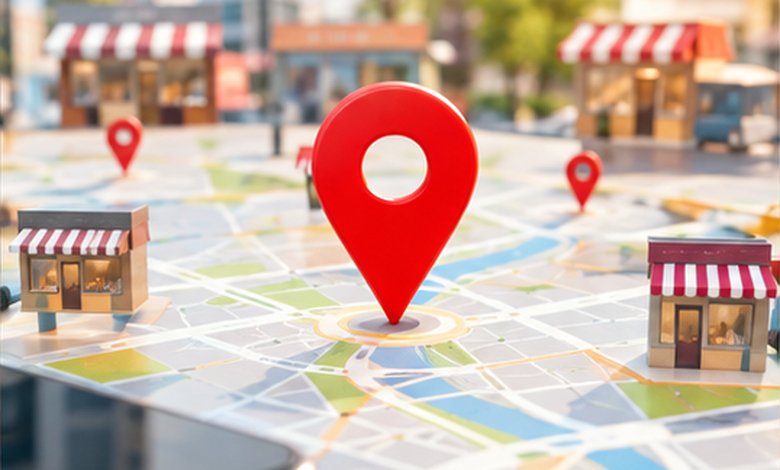
Learn how geo marketing uses location to reach relevant customers, improve experiences, and drive more meaningful local sales.
Geo marketing uses geographic and location data to make marketing more relevant to where customers live, work, travel, or shop. It can include location-based advertising, radius targeting, geofencing, local promotions, territory planning, and choosing better locations for physical stores.
Imagine a coffee shop that promotes breakfast to commuters at 7:30 a.m., a retailer that advertises only within its delivery area, and a restaurant that changes its offer during a nearby stadium event. None needs to speak to everyone. They need to speak to the right people in the right place.
That is the central idea behind geo marketing.
Instead of treating a market as one giant audience, businesses divide it geographically and ask a more useful question: What does this particular place tell us about the people and opportunities within it?
The answer can influence advertising, promotions, store locations, sales territories, distribution, product decisions, and customer experiences. Done well, geo marketing is less about tracking people and more about understanding context.
What Is Geo Marketing?
Geo marketing is the use of geographic information to plan, deliver, and evaluate marketing activities. The information can include a customer’s approximate location, store locations, delivery zones, neighborhoods, postal areas, travel patterns, demographic characteristics, or other place-related data.
The important distinction is that geo marketing is broader than simply putting a location on an advertisement.
A retailer might use geographic data to decide where to open its next branch. A food-delivery company might divide a city into delivery zones. A national brand might adapt promotions to different regions. A local service business might advertise only in areas it can realistically serve.
In other words, location becomes part of the marketing decision rather than merely an address attached to the business.
Geo marketing turns geography from background information into a business decision.
The term is also sometimes used differently in discussions about newer AI-based marketing practices. In this guide, geo marketing refers specifically to geographic or location-based marketing.
How Geo Marketing Works
At its simplest, the process has four parts: location data, audience understanding, an action, and measurement.
A business first identifies useful geographic information. That could be the locations of existing customers, branches, competitors, population centers, delivery areas, or high-traffic destinations.
Next, it looks for meaningful patterns. Perhaps customers within five kilometers of a store purchase more frequently. Perhaps one neighborhood responds better to premium products while another is more price-sensitive.
The business can then create a location-specific action, such as an advertisement, offer, delivery zone, event promotion, or new-store decision.
Finally, it measures whether the geographic strategy actually changed a business outcome.
That last step matters. A beautifully mapped campaign is not automatically a successful one.
Types of Geo Marketing
Geo Targeting
Geo targeting means selecting particular geographic areas for marketing activity.
A company might target a country, province, city, postal area, or radius around a physical location. Google Ads, for example, supports geographic targeting by countries, regions, cities, postal areas, and radii around locations.
Consider a home-cleaning company that serves customers within 15 kilometers of its office. Advertising throughout an entire country would create unnecessary exposure. A carefully selected service area makes the audience much closer to the company’s actual operating territory.
Geofencing
Geofencing creates a virtual geographic boundary around a physical area. An app or advertising system can then use that boundary as a condition for a particular experience or campaign.
Apple describes geofencing as monitoring whether a device enters or leaves a geographic region.
A cinema could create a campaign around a shopping district and promote evening screenings to an eligible audience. A conference organizer could use a geographic boundary around the venue to deliver event-related information.
Geofencing is powerful, but it should not be confused with perfect physical accuracy. Location signals can be approximate, delayed, unavailable, or affected by device settings.
Geo-Conquesting
Geo-conquesting uses geographic proximity to compete for attention around another business or destination.
For example, a restaurant could promote its own lunch offer to people in an area containing several competing restaurants. The objective is not simply “reach people in this city”; it is to reach a strategically important pocket of potential demand.
This approach can be clever, but the message still needs a reason to switch. Geographic proximity alone does not create customer preference.
Localized Offers
A business can adapt promotions according to regional demand.
A clothing retailer might promote rainwear in a region experiencing wet weather while highlighting lightweight clothing somewhere warmer. A food business could promote delivery during local events when demand for convenience rises.
The best localized offers are not random variations. They connect place + customer need + timing.
Location Intelligence for Business Decisions
Some of the most valuable applications happen before an advertisement is ever created.
Businesses can map customers, competitors, population density, transportation routes, sales territories, and store performance to identify expansion opportunities.
This is particularly valuable for retail, restaurants, healthcare providers, financial services, logistics companies, franchises, and other businesses where physical location directly affects revenue.
Geo Marketing vs. Geotargeting vs. Geofencing
These terms overlap, but they are not interchangeable.
| Approach | Main idea | Typical use |
| Geo marketing | Uses geographic information across marketing decisions | Campaigns, territories, expansion, promotions |
| Geo targeting | Selects particular geographic audiences or areas | Digital advertising |
| Geofencing | Defines a virtual geographic boundary | Location-triggered experiences or campaigns |
| Geo-conquesting | Targets areas associated with competitors | Competitive campaigns |
| Location intelligence | Analyzes geographic data for business decisions | Planning, expansion, customer analysis |
Think of geo marketing as the umbrella. Geo targeting and geofencing are specific techniques that can sit underneath it.
Why Geo Marketing Matters
Location provides context that demographic information alone often misses.
Two customers can have similar ages, incomes, and interests but behave completely differently because one lives beside a university and the other lives in a suburban residential district.
Place affects commuting, purchasing habits, accessibility, competition, weather exposure, local culture, delivery economics, and even the time of day when customers are most valuable.
Google’s own advertising documentation emphasizes that a business should target where its customers actually are, which may differ from the business’s physical location. It also notes that geographic matching is based on multiple signals and is not guaranteed to be 100% accurate.
That limitation is worth remembering.
Location data is a useful signal, not a crystal ball.
Practical Geo Marketing Examples
A Local Restaurant
A restaurant has a two-kilometer delivery radius. Instead of promoting delivery to an entire city, it concentrates campaigns within areas it can serve profitably.
It could then create separate messages for lunch and dinner, while excluding neighborhoods where delivery costs make orders uneconomical.
The geographic strategy is not simply “advertise locally.” It connects location to unit economics.
A Multi-Location Retailer
Suppose a retailer has 30 branches.
National advertising may create awareness, but local campaigns can highlight the nearest branch, its opening hours, current promotion, or available services.
The company can also compare performance across locations. If two stores serve similarly sized populations but produce dramatically different results, geographic analysis can prompt deeper questions about competition, accessibility, pricing, or local demand.
A Healthcare Provider
A clinic might map existing patients and identify underserved areas nearby.
Rather than immediately opening another location, the business could test demand with temporary services, partnerships, or targeted communications. Geography becomes a way to reduce the uncertainty surrounding expansion.
An Event Business
A concert, exhibition, or sporting event creates a temporary concentration of people.
A nearby business can adapt its offer around that event—for example, restaurants promoting pre-event dining or transportation providers highlighting convenient routes.
The opportunity comes from understanding why people are in a particular place, not merely knowing that they are there.
How to Build a Geo Marketing Strategy
1. Start With the Business Constraint
Do not begin by drawing circles on a map.
Start with the commercial problem. Are you trying to increase store visits, improve delivery profitability, expand into new areas, fill unused capacity, attract customers from competitors, or decide where to open?
The objective determines which geographic information actually matters.
2. Map the Real Service Area
Your ideal marketing territory should reflect reality.
Consider delivery distance, travel time, store accessibility, service capacity, local competition, and customer willingness to travel. A five-kilometer radius looks neat on a map, but customers do not move around like perfect circles.
A river, highway, mountain, transit network, or congested road can make two nearby neighborhoods behave like very different markets.
3. Segment Places by Meaningful Differences
Avoid creating dozens of tiny geographic segments simply because your technology allows it.
Instead, group locations according to meaningful differences such as customer value, purchasing behavior, demand, competition, or operational cost.
A useful segment should lead to a different business decision.
4. Match the Message to the Place
Location targeting becomes much more valuable when the creative reflects the local context.
“Visit our store” is generic.
“Need lunch before the 2 p.m. game? Order ahead and collect nearby” connects the message to a situation.
The principle is simple: location should change the reason for the message, not just its audience.
5. Measure Business Outcomes
Track outcomes that matter to the business.
Depending on the campaign, that might include:
- Store visits
- Calls or enquiries
- Purchases
- Delivery orders
- Revenue per location
- Cost per customer
- Repeat purchases
- New customers by area
- Sales before and after a geographic campaign
A geographic campaign that generates thousands of impressions but no meaningful business result needs to be reconsidered.
Common Geo Marketing Mistakes
Making the Geographic Area Too Broad
A broad audience can waste budget and dilute relevance.
If a service only operates in three neighborhoods, reaching people 50 kilometers away creates activity without realistic commercial value.
Making the Area Too Small
The opposite problem is just as real.
Google notes that very small geographic targets may show ads intermittently or not at all because they may not meet targeting criteria.
The answer is not always “make the radius smaller.” Sometimes a larger but economically sensible area produces better results.
Assuming Location Is Always Precise
Different systems can infer location from different signals, including device information, user settings, and behavioral signals. Google explicitly warns that geographic matching is not 100% accurate.
Treat location as probabilistic information unless you have a legitimate reason to rely on precise, permissioned location data.
Ignoring Privacy
Location can be highly sensitive.
In January 2025, the U.S. Federal Trade Commission finalized an order against Gravy Analytics and Venntel concerning the sale and use of sensitive location data, including data associated with visits to healthcare facilities and places of worship.
That is a useful warning for marketers: just because location data can be collected does not mean it should be collected, combined, or used without careful consideration of consent, purpose, security, and applicable law.
Good geo marketing should feel relevant—not invasive.
When Geo Marketing Makes the Most Sense
Geo marketing is particularly useful when place changes the economics or experience of buying.
It can be especially valuable for:
- Restaurants and food delivery
- Retail stores
- Franchises
- Hotels and travel businesses
- Healthcare providers
- Real estate
- Home services
- Automotive businesses
- Events and entertainment
- Logistics and delivery
- Financial services with physical branches
It is less useful when location has little relationship to the product, service, fulfillment model, or customer decision.
That is an important strategic distinction. Not every business needs a sophisticated geographic system.
How Much Data Do You Actually Need?
Less than many businesses assume.
A small company may begin with customer postcodes, store locations, delivery zones, sales by area, and competitor locations.
A larger organization may add demographic datasets, mobility patterns, traffic information, weather data, customer lifetime value, property information, and geographic information system (GIS) analysis.
The sophistication should follow the decision.
Better geographic insight beats more geographic data.
FAQ
What is geo marketing in simple terms?
Geo marketing means using information about places and locations to make marketing decisions more relevant. It can influence advertising, promotions, store locations, territories, and customer experiences.
What is the difference between geo marketing and geotargeting?
Geo marketing is the broader discipline of using geographic information in marketing. Geotargeting is a specific technique for selecting audiences or areas based on geography.
What is an example of geo marketing?
A restaurant advertising a lunch offer only within its profitable delivery area is a simple example. A retailer using customer locations to decide where to open its next store is a broader example.
Is geofencing the same as geo marketing?
No. Geofencing is one technique used in location-based marketing. It creates a virtual geographic boundary that can trigger an action when a device enters or leaves an area.
Is geo marketing accurate?
Not always. Location can be inferred from different signals and may be approximate. Businesses should account for uncertainty and avoid treating geographic targeting as perfectly precise.
Key Takeaways
- Geo marketing uses geographic information to make marketing and business decisions more locally relevant.
- Geo targeting, geofencing, and geo-conquesting are specific techniques within the broader approach.
- The strongest strategies connect place, customer need, timing, and business economics.
- A map is useful only when it leads to a better decision.
- Location targeting is not perfectly precise, so geographic data should be treated as a signal rather than absolute truth.
- Privacy matters, particularly when businesses handle precise or sensitive location information.
- Small businesses can start with surprisingly simple data: customer areas, service boundaries, sales by location, and nearby competition.
Additional Resources
- Sensitive Location Data Enforcement Action: A valuable privacy and compliance reference showing why responsible collection and use of location data matters in modern marketing.