
SEO Events: The 2026 Guide to Attend
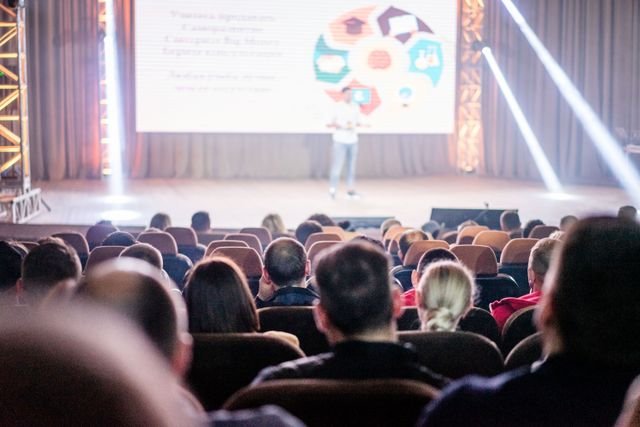
SEO events worth attending in 2026, find the right conference, avoid costly mistakes, and turn one day into real growth.
SEO events are conferences, summits, workshops, and meetups where professionals exchange practical knowledge, case studies, tools, and industry perspectives. In 2026, the strongest events increasingly combine technical search, content, AI, analytics, digital PR, and community rather than treating them as separate disciplines.
Why SEO Events Are Still Worth Your Time
A conference can look expensive when the alternative is watching presentations from your desk. But the real value of a good event usually isn’t the presentation itself; it’s the combination of current ideas, candid conversations, practical examples, and people you would never normally meet.
That matters because the industry is changing unusually quickly. Google’s current documentation says its AI Overviews and AI Mode use existing Search systems and supporting web pages, while its June 2026 Search Console update introduced dedicated reporting for visibility in generative AI features for a subset of sites.
The best event is not necessarily the biggest event; it is the one that matches the problem you need to solve.
There is another reason to attend selectively. A large conference can expose you to dozens of ideas, but implementing even three of them well can be more valuable than collecting 30 pages of notes.
What Counts as an SEO Event?
The phrase covers a surprisingly broad range of formats.
A major conference might have hundreds or thousands of attendees, multiple stages, sponsors, networking sessions, workshops, and specialist tracks. A meetup may have 20 people around a table and produce a more useful conversation than a packed auditorium.
Conferences
Conferences are best for breadth. You can hear from practitioners working across technical SEO, content strategy, ecommerce, international markets, analytics, digital PR, AI, and agency operations in a single trip.
They are particularly useful when you’re trying to understand where the industry is heading rather than solve one narrowly defined problem.
Workshops and Masterminds
Workshops are better when you want to do something rather than simply listen.
A technical workshop that walks through diagnosing a crawling problem, for example, can be far more useful to an in-house team than a general presentation about technical SEO.
Masterminds go a step further by making peer discussion part of the experience. They tend to suit experienced professionals who already understand the fundamentals and want feedback on difficult business or implementation problems.
Meetups and Community Events
Don’t underestimate smaller events.
Local meetups can provide unusually strong networking because repeated attendance lets relationships develop naturally. They’re also often free or inexpensive, making them a sensible starting point for newcomers.
For example, community calendars currently include conferences, meetups, drinks, and online events rather than focusing only on large commercial conferences.
The Best SEO Events to Know About in 2026
There is no universal “best” event. The right choice depends on your role, budget, location, experience, and the kind of problems you are trying to solve.
The 2026 calendar illustrates that range particularly well.
| Event type | Best for | Typical strength | Watch out for |
| Large conference | Broad learning | Many speakers and topics | Information overload |
| Specialist summit | Advanced practitioners | Deep subject expertise | Narrower coverage |
| Workshop | Hands-on learning | Practical implementation | Less networking |
| Meetup | Beginners and local professionals | Community and relationships | Smaller speaker lineup |
| Mastermind | Experienced professionals | Peer problem-solving | Can be expensive |
| Online event | Remote attendees | Convenience and accessibility | Weaker informal networking |
brightonSEO San Diego
The San Diego edition is scheduled for September 15–16, 2026. Current event calendars describe it as a major US gathering focused on practical SEO, content, and search marketing.
Its biggest appeal is breadth: someone working on content can find relevant sessions while a technical practitioner can follow a completely different track.
Ahrefs Evolve
Ahrefs Evolve is scheduled for October 12–13, 2026, in San Diego according to current conference listings.
It is a particularly interesting option for professionals who want the intersection of SEO, marketing, content, and changing search behavior rather than a purely technical conference.
WTSFest Philadelphia
WTSFest Philadelphia is scheduled for October 1, 2026. Current event calendars position it within the Women in Tech SEO community and practical educational conference space.
For attendees who value community alongside education, that combination can be as important as the speaker lineup.
Chiang Mai SEO Conference
The Chiang Mai event is scheduled for November 9–13, 2026, and is particularly associated with international practitioners, affiliate marketing, and practical implementation.
Its multi-day format makes it a different proposition from a one-day conference: you’re buying more time for conversations and relationships, not simply more talks.
SaaS SEO Alliance
For SaaS professionals, the Delhi event scheduled for September 11–12, 2026 is worth watching. Current listings describe it as a two-day conference with expanded sessions, workshops, and networking.
That specialization matters. A SaaS founder doesn’t necessarily need the same event as a local-business marketer or technical SEO specialist.
How to Choose the Right Event
Choosing an event by speaker popularity alone is an easy mistake.
Instead, start with the problem you want to return home and solve.
Start With Your Role
An ecommerce manager might prioritize product discovery, category architecture, analytics, and conversion. An agency owner may care more about processes, client acquisition, reporting, and scalable delivery.
A technical SEO specialist, meanwhile, could get dramatically more value from a specialist technical conference than from a broad digital marketing expo.
Match the Event to Your Experience
Beginners usually benefit from events with broad educational tracks and accessible speakers.
Experienced practitioners should look for advanced case studies, experiments, technical sessions, and peer discussions. If every session description sounds like an introduction to concepts you already know, you’re probably shopping at the wrong level.
Check the Agenda Before Buying
Don’t buy the ticket first and inspect the program afterward.
Look for the ratio of practical sessions to promotional talks, whether speakers explain methodology rather than merely announcing results, and whether the agenda reflects your actual responsibilities.
A strong case study should tell you what was changed, why it was changed, how success was measured, what happened afterward, and what failed along the way.
How Much Do SEO Events Cost?
Ticket price is only one part of the calculation.
A supposedly cheap conference can become expensive once you add flights, accommodation, meals, local transportation, and time away from client or company work. Conversely, an expensive local event may have a better return if you can attend without traveling.
Current 2026 listings show a wide spread: some events offer free or low-cost access, while major conferences can cost hundreds or more than $1,000 before travel.
A Simple Value Test
Before purchasing, estimate:
Expected value = useful connections + applicable ideas + professional opportunities − total cost
You don’t need to put an exact dollar value on every item. The point is to force yourself to ask whether you have a realistic reason to attend.
For an employee, one useful relationship with a specialist might justify the trip. For an agency owner, one strong client conversation could potentially pay for the entire event.
How to Get More From an Event
The biggest mistake is arriving with no plan.
Before the event, identify three outcomes you want. For example: learn how to diagnose a specific technical problem, meet two experienced practitioners in your field, and identify one process worth testing at work.
Before You Go
Research the speakers and attendees when that information is available.
Don’t just look for famous names. Find people who work on problems similar to yours, then prepare specific questions. “What’s new in SEO?” is forgettable; “How did you validate that change before rolling it out across 5,000 pages?” can start a real conversation.
While You’re There
Take fewer notes.
Write down the idea, why it matters, and what you will do with it. A useful note might read: Test this approach on our product category pages next Tuesday, rather than several paragraphs copied from a slide.
Make time between sessions for conversations. The Australian conference community makes a similar point in its event guidance: much of an event’s value can come from conversations between sessions, over lunch, and at informal gatherings.
After You Return
This is where conference ROI is won or lost.
Within 48 hours, sort your notes into three buckets:
- Implement: ideas you can test immediately.
- Investigate: promising ideas requiring more evidence.
- Ignore: interesting information that isn’t relevant to your situation.
Then schedule the first action. Otherwise, “great conference idea” has a nasty habit of becoming “something I meant to try six months ago.”
What Topics Matter Most in 2026?
The event landscape itself reveals where professional attention is moving.
AI is now appearing alongside established subjects such as technical SEO, content, measurement, digital PR, ecommerce, and international search. Current event calendars explicitly group AI search with SEO and authority-building events, while specialist conferences increasingly mix traditional search topics with generative AI.
That doesn’t mean older fundamentals have disappeared.
Google’s current guidance says the same foundational practices remain relevant to AI features: technically accessible content, adherence to policies, and helpful, reliable, people-first material. Google also states that there are no additional technical requirements specifically for appearing as a supporting link in AI Overviews or AI Mode.
AI has changed the interfaces people use to discover information, but it has not eliminated the need for useful, trustworthy information.
This is an important distinction when evaluating conference sessions. Be wary of presentations promising a completely new formula every few months. Strong events usually teach durable principles alongside emerging tactics.
Common Mistakes When Attending SEO Events
Choosing Prestige Over Relevance
A famous event isn’t automatically the right event.
If you’re responsible for a multilingual ecommerce site, a specialist international conference may produce more value than a giant general marketing event.
Trying to Attend Everything
You cannot absorb six simultaneous talks.
Pick sessions based on your objectives, leave room for conversations, and accept that missing a presentation is sometimes the correct decision.
Treating Every Speaker as an Authority on Everything
Someone can be excellent at technical SEO and have little expertise in enterprise procurement, internationalization, or content operations.
Assess claims according to evidence, experience, methodology, and whether the speaker’s situation resembles yours.
Confusing Inspiration With Evidence
A compelling presentation is not proof that a tactic will work for your organization.
Google itself cautions that following its technical requirements and best practices does not guarantee crawling, indexing, or inclusion in results.
The same principle applies to conference advice: treat impressive case studies as hypotheses to investigate, not guarantees.
Should Beginners Attend SEO Events?
Yes, but choose carefully.
A beginner may get more from a friendly local meetup or accessible one-day conference than from an advanced technical summit. The goal isn’t to understand every presentation; it’s to build a mental map of the discipline and discover which areas deserve deeper study.
Don’t worry if half the terminology sounds unfamiliar. Write down the concepts you don’t understand and research them afterward. Over time, those confusing acronyms become a vocabulary you can actually use.
Are Virtual SEO Events Worth Attending?
They can be, particularly when travel is impossible or the event offers workshops that work well online.
The trade-off is networking. Online events make learning easier to fit around work, but spontaneous conversations are harder to reproduce. A good compromise is to use virtual events for focused education and local meetups for relationship-building.
Frequently Asked Questions
What are SEO events?
SEO events are conferences, workshops, summits, webinars, and meetups focused on search marketing, website visibility, content, technical practices, analytics, and related digital disciplines.
Which SEO events are best for beginners?
Beginners should generally choose accessible conferences, workshops, or local meetups with broad educational sessions rather than highly specialized technical summits.
Are SEO conferences worth the money?
They can be, provided the event addresses your actual professional needs. Calculate the full cost, identify specific learning or networking goals, and plan how you will apply what you learn afterward.
What should I bring to an SEO conference?
Bring a laptop or notebook, questions related to current projects, a simple way to exchange contact details, and a plan for which people or sessions you want to prioritize.
How do I find SEO events near me?
Look at industry community calendars, specialist conference directories, local professional groups, and event platforms. Smaller meetups are often the easiest way to discover recurring events in your region.
Key Takeaways
- SEO events are not interchangeable: choose according to your role, experience, budget, and current problems.
- The 2026 calendar is broad: major conferences now sit alongside specialist summits, workshops, masterminds, meetups, and online events.
- AI is a major conference theme, but foundational technical and content practices remain important.
- The speaker lineup isn’t everything: agenda quality, audience fit, case-study depth, and networking opportunities matter just as much.
- Budget for the entire trip, not merely the ticket.
- Go with three concrete objectives rather than trying to consume every presentation.
- The real payoff happens afterward: turn the best ideas into tests, conversations, and measurable changes.
Additional Resources
- Google Search Essentials: A useful primary source for understanding Google’s technical requirements, spam policies, and people-first content guidance.